
Are we in the last decade?
The past few years have seen the arrival of the E-bike. At first a clunky heavy contraption marketed at the elderly, but as time progressed it started slowly merging into a marvelous piece of engineering. After a solid time of development and progression, I thought it was time to stand still on where we are today, and what else to expect in the future.
Progression
At first, the systems that entered the market were mainly built for city commuters and elderly. Big displays, low power output and chunky batteries that were strapped onto the frame instead of incorporated into the bicycle. Besides looking rather agricultural, they had trouble holding up to the battering of mountain bike trails and the crashes that come with riding off road.
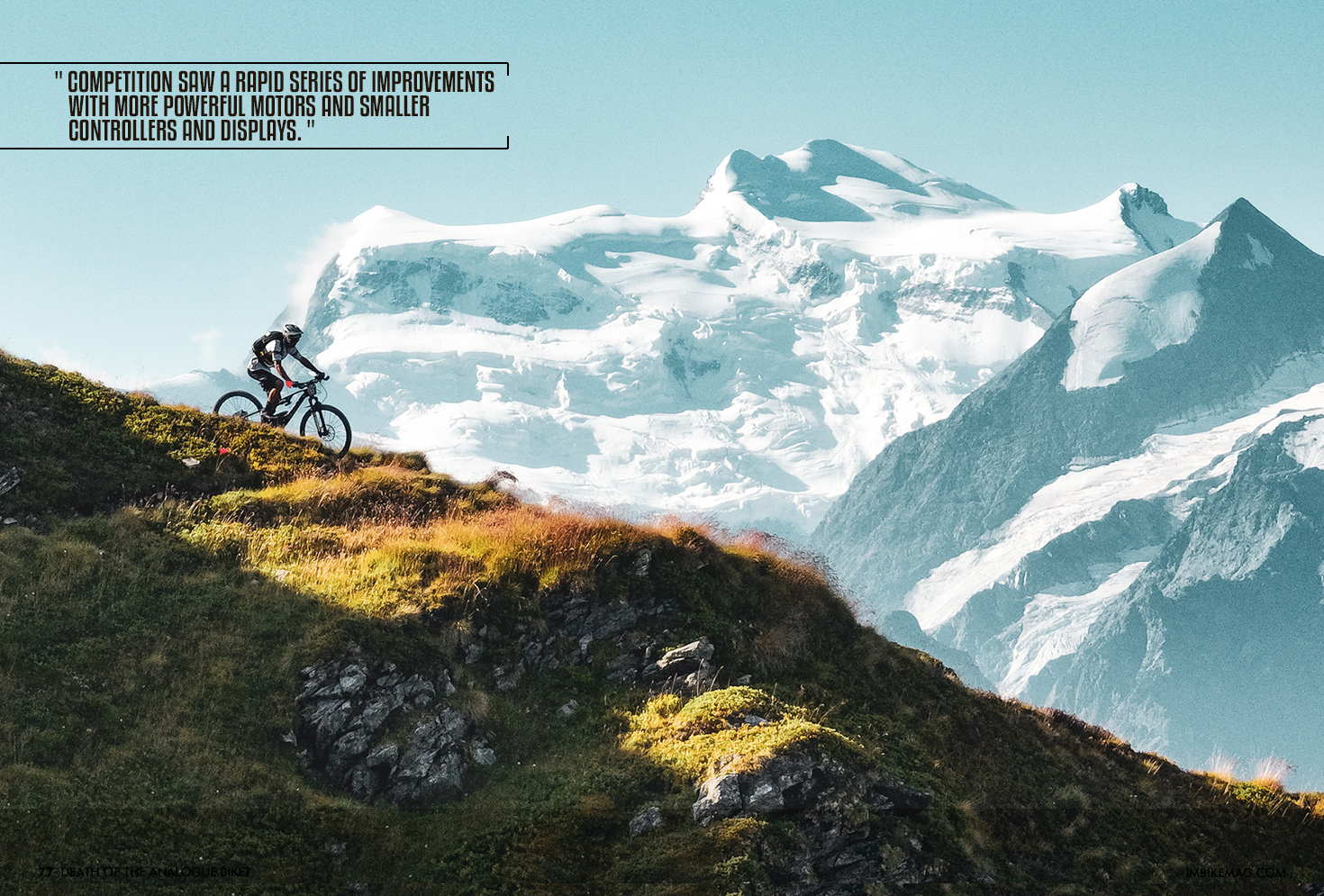
Right after Bosch launched its first iteration in 2010, development kicked off with a steady stream of improvements. Frame designers had more time to work on integration of the motor and battery systems while at the same time other players like Yamaha and Brose started releasing their systems. Competition saw a rapid series of improvements with more powerful motors and smaller controllers and displays. It took until 2016 for another major player to join the boom, Shimano. They arrived on the scene with a well developed system with some smart integrations like power output adjustments through their app and a very sleek interface.
Bike manufacturers made leaps and bounds too with battery integration in the downtube and adjusted geometry to allow a proper functioning suspension. Component designers were still trying to work out the best wheel size, tire size and gear ratios. Sram even went back to an 8 speed system to boost cassette and chain longevity.
Power and ride time
For a while it became a race between brands, on who could fit the biggest battery in their system. We went from 400Wh to 500Wh, 620Wh and now the Full Pull bikes come with a whopping 720Wh battery. Smart technologies and improvement in the capacity of the 18650 cells made it possible to up the ‘fuel tank’ and increase the ride time. Still this meant a weight penalty and although some riders didn’t care much, others were struggling with the 26kg bike weight these machines put on the scales.
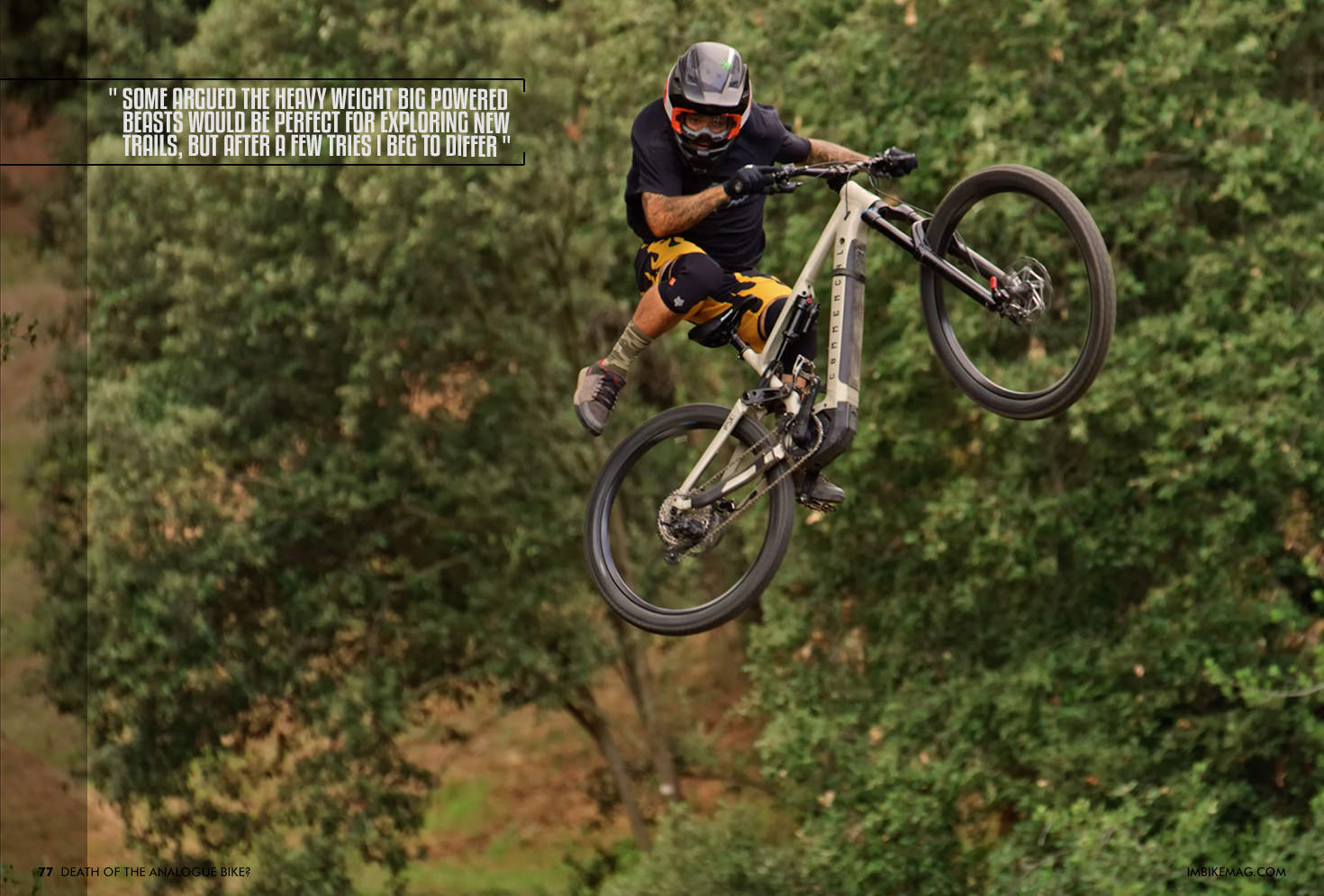
For me, this has always been a gripe as for the riding I enjoy doing I prefer to have a bike that is nimble, maneuverable and can be turned on the steep sections. Some argued the heavy weight big powered beasts would be perfect for exploring new trails, but after a few tries I beg to differ. People claiming that have clearly never ended up on a steep section with Mini Cooper sized boulders and a staircase carved out of the granite to navigate down.
In terms of power, the systems reached peak potential fairly quickly. With the introduction of the Bosch CX motor (which was technically the same as their ActiveLine but with a different software tune) boosted out more power than your rear wheel could handle. Other manufacturers followed suit, pumping out 85-90nM of torque. More is not necessarily better either, as at some point your drivetrain starts to break and the power becomes hard to manage in off-road situations.

Weight Watchers
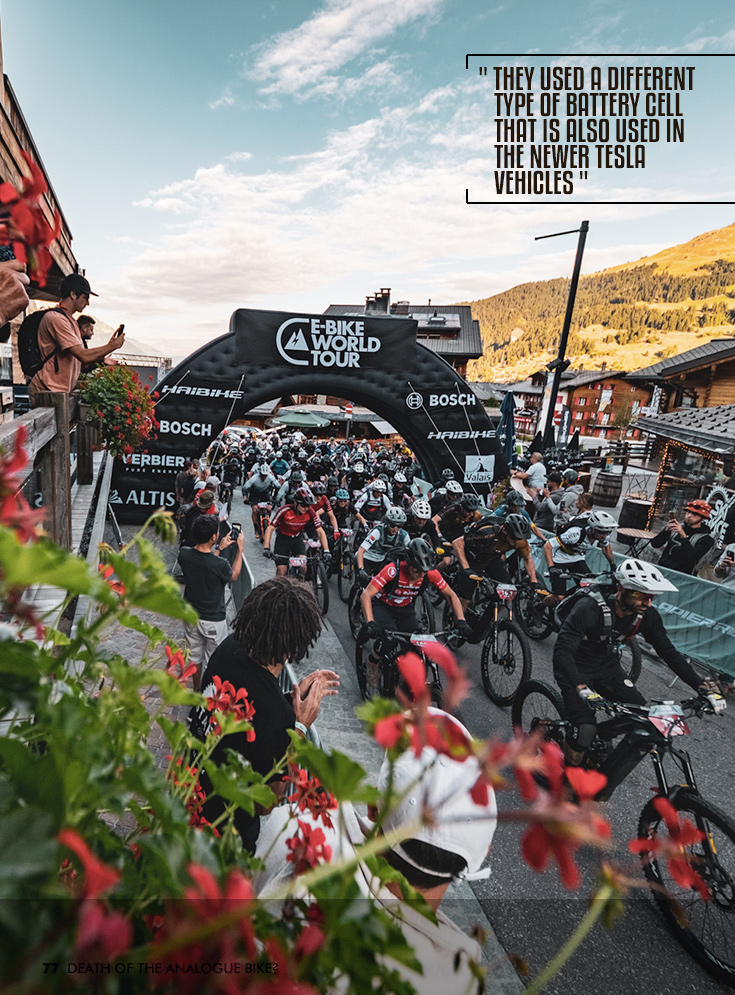
Fast forward to 2020 where Orbea launched its Rise. An E-MTB hitting the scales at just over 16kg. A full power Shimano motor was able to push out a slightly squeezed 60nM of torque and the 360Wh battery could be boosted by 252Wh through an external range extender. To achieve this feat they used a different type of battery cell that is also used in the newer Tesla vehicles and some very clever engineering on the frame to bring its weight down considerably.
Of course other brands started to follow suit, but still often at eye watering price points. Specialized had been on the right path for some years, using their Brose made motor and pushing an impressive amount of user interface design, but lacking the oomph of other brands in the torque department. For 2023 they did manage to bump this up to a respectable 55nM though.
Now things start moving in the right direction, with E-MTB’s handling not being far off from your analogue counterpart. German system Fazua launched an impressive system last year called the Ride60. Providing a (you guessed it) 60nM of torque, this is as punchy as you need it and incredibly quiet too. We spent a good amount of time on it while testing the Haibike Lyke (see review in issue 76) and were amazed at how much range we managed out of this system. I easily cranked out 1000m of climbing spending 50% in the most powerful mode and I am confident that with some reserved riding I can easily crack 1500m on a charge. Not bad for a 90kg rider. Good news is that this system is becoming widely used in multiple brands and models like Transition, Ghost, LaPierre and Trek.
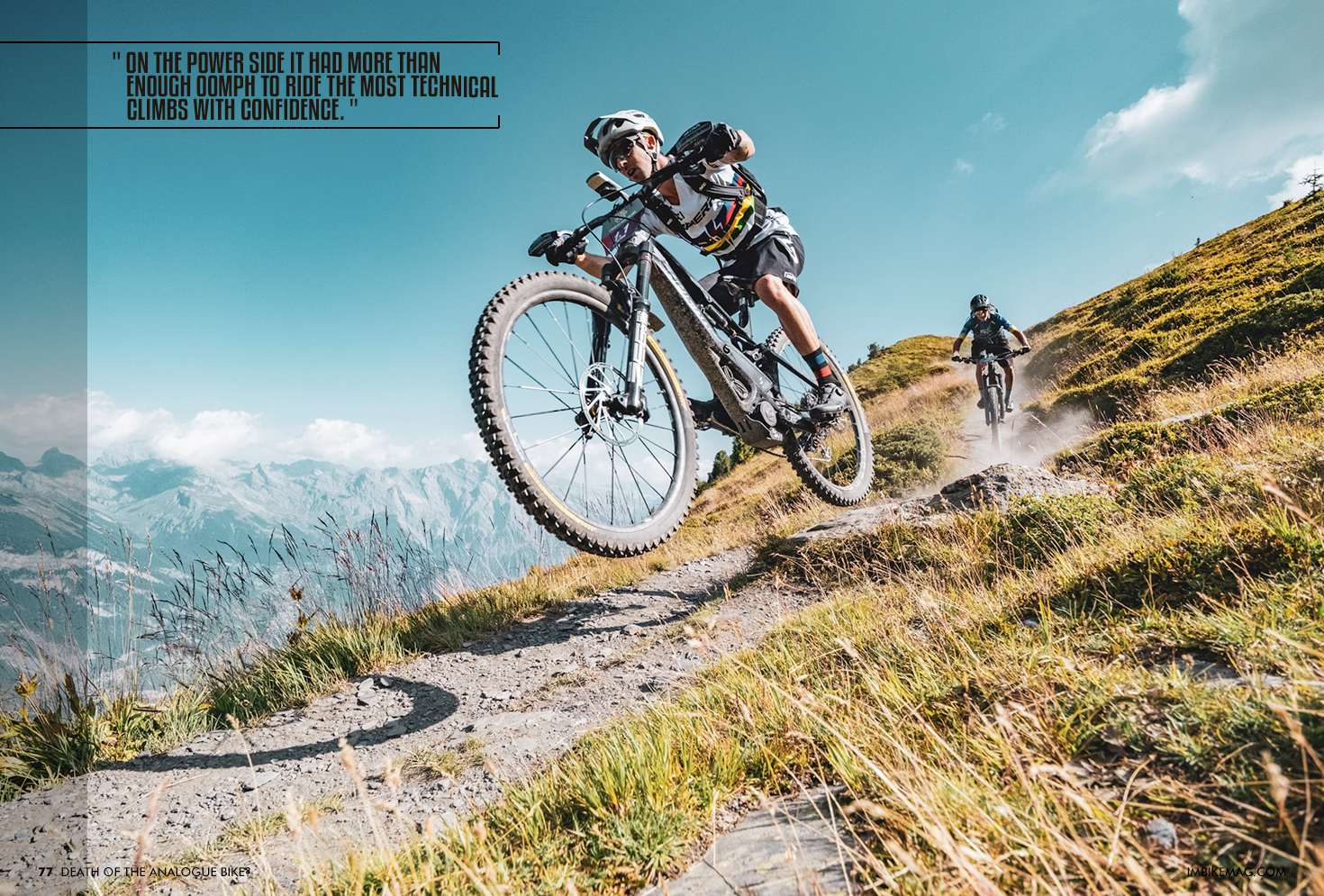
Also hot off the press is Bosch’s answer to the growing demand for a lightweight system. With the Performance Line SX the electromotor Mogul pumps out an impressive system. Motor system weight of just a hair over 2kg, a good 55nM torque and several battery options make a great system for the weight conscious rider. We recently had the chance to give this brand new system a try and although we could not test the endurance of the system, on the power side it had more than enough oomph to ride the most technical climbs with confidence. Interesting to mention that it’s not a plain and simple Watts to nM to weight ratio either. The way power is transferred to the rear wheel makes a big difference and Bosch has a very interesting ‘Sprint’ mode where your higher pedal cadence gives you that extra push when you need to clear that rock section. Very intuitive and effective.
When is the funeral?
This of course brings the question, are analog bikes dead? In my opinion, we have definitely entered the ‘final decade’ in the life of riding bikes as we know it. System integration has gotten so advanced that it is hard to tell if a bike has electric assistance or not and with the added weight coming down to only 4kg you seem to run out of excuses to not use the assistance. These modern machines can be noseturned, bunny hopped and hike-a-biked to any location where you would normally go and if you somehow run out of juice the motors are virtually drag free to take you home. Of course there is the ultimate argument of ‘I’m riding to get tired/fit’ but still, it has long been proven that the extra boost does not need to lower your heart rate at all, you just get more distance in the same time.
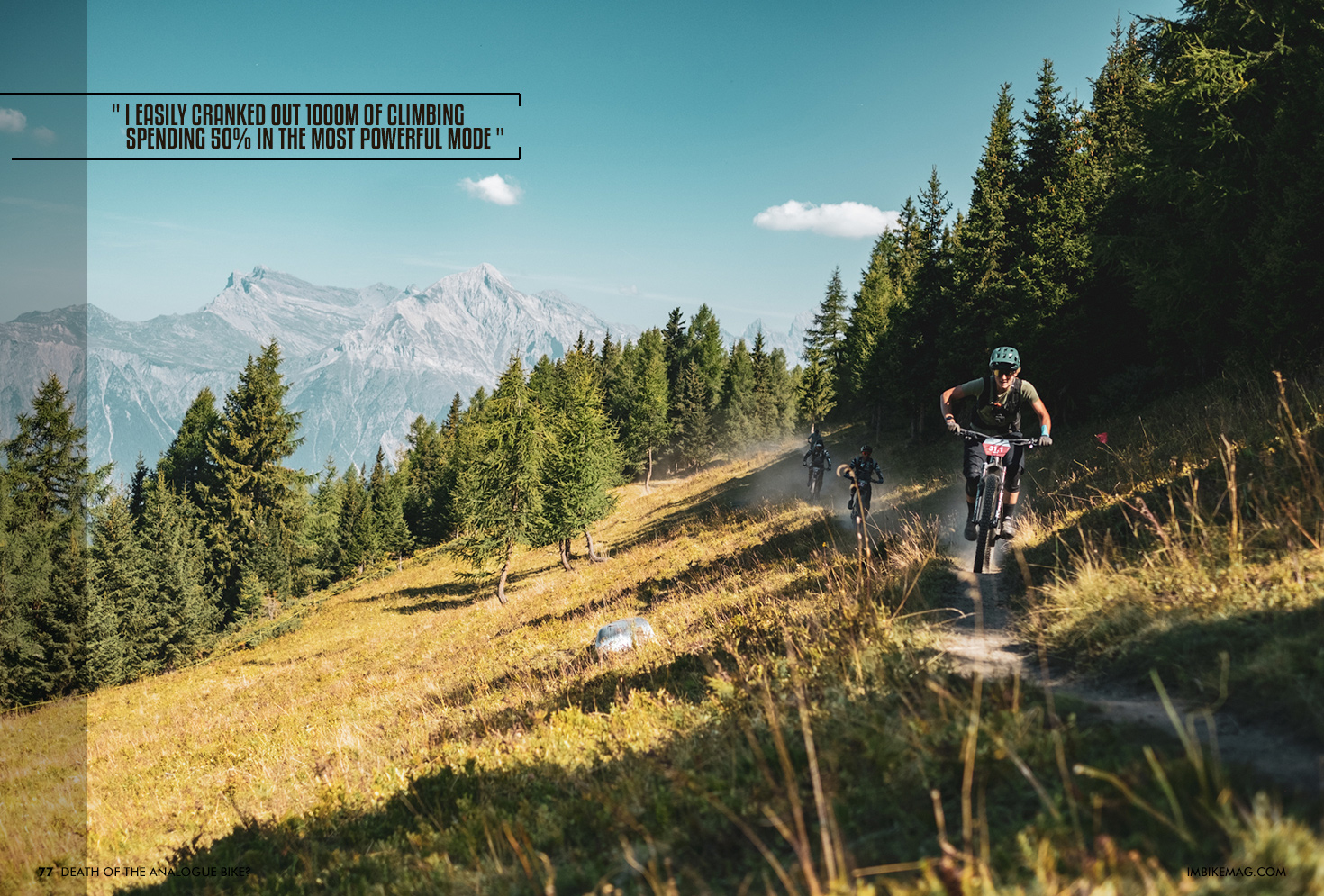
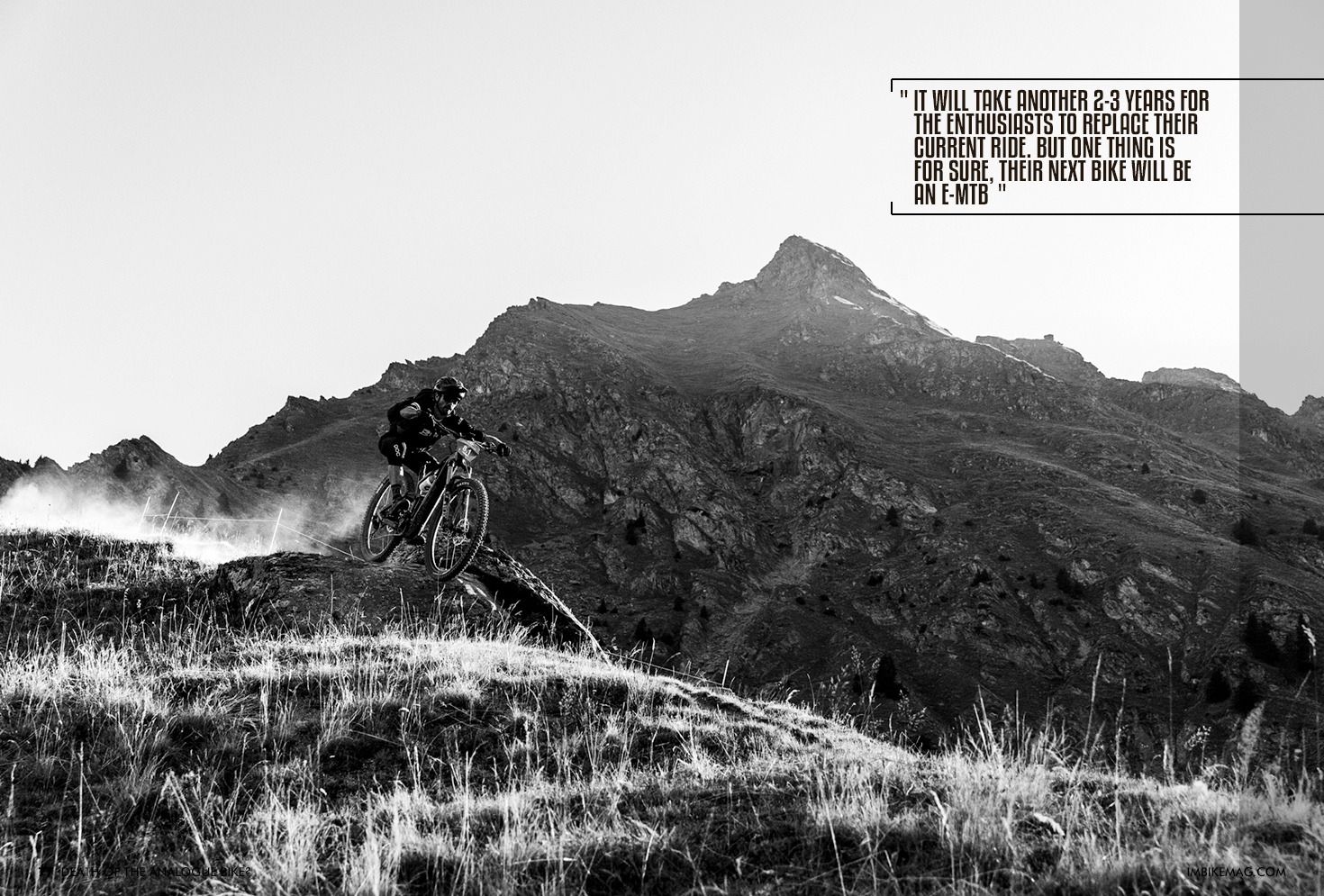
When is the funeral then? I reckon it will take another 2 years for the systems to be available in all possible travels and geometries that people are after. Currently, the brands are really focusing on the short and mid travel bikes, but in my opinion the real early adopter will be the 150-170mm travel guy. This rider doesn’t care much about weight to start with as long as it's within reason and unlike your XC/AM rider this crew is riding up for the descents. Anything bringing them more descents means a win. Once the various models hit the market, it will take another 2-3 years for the enthusiasts to replace their current ride. But one thing is for sure, their next bike will be an E-MTB. Why would you not buy something that gives you more trail for less effort and no compromise on the descent?